Safety doesn’t start with equipment or training alone—it starts with conversation. And in high-risk environments like construction, manufacturing, or utility work, those conversations need structure. That’s where a toolbox talk template free becomes more than just a document—it’s a frontline tool for preventing incidents, reinforcing protocols, and building a culture of accountability.
Yet many supervisors still wing safety meetings, relying on memory or informal chats that leave gaps in understanding and documentation. Without a consistent format, compliance risks rise, and critical points get overlooked. The good news? You don’t need to reinvent the wheel. A well-designed toolbox talk template free can save hours, boost engagement, and ensure nothing slips through the cracks.
Let’s break down how to use these templates effectively, where to find the best ones, and how to adapt them for real-world impact.
Why a Structured Toolbox Talk Template Matters
Toolbox talks—also known as tailgate meetings or safety briefings—are short, focused discussions held at the job site before work begins. They’re designed to address immediate hazards, reinforce best practices, and confirm team awareness.
But without structure, these talks become inconsistent. One day you cover fall protection; the next, someone just says, “Be safe out there.”
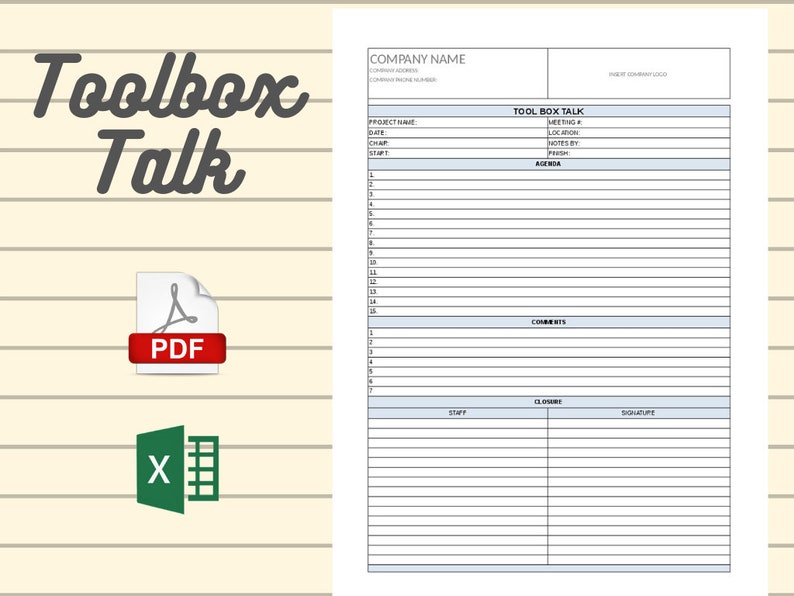
A free toolbox talk template standardizes the process. It ensures every session includes:
- Topic and date
- Attendee sign-in
- Key safety points
- Hazard identification
- Mitigation strategies
- Supervisor signature
This consistency isn’t just about compliance—it’s about clarity. Workers leave knowing exactly what’s expected, what to watch for, and how to respond.
Key Elements of an Effective Free Template
Not all free templates are created equal. Many online options are either too sparse or overly complex. The best ones strike a balance: simple enough to complete in minutes, but thorough enough to satisfy OSHA and internal audits.
Here are the non-negotiables:
#### 1. Clear Topic Section Each talk should center on one specific hazard or safety rule—electrical safety, PPE requirements, ladder use, etc. The template should prompt you to define this upfront.
Example: Instead of “General Safety,” write: “Safe Use of Extension Cords in Wet Conditions.”
#### 2. Attendance Tracker A blank line list isn’t enough. Use a table format with columns for name, signature, and employee ID. This proves participation during inspections.
#### 3. Hazard & Control Breakdown Include a section that forces you to identify: - What could go wrong? - Who is at risk? - How will we prevent it?
This shifts the talk from passive listening to active problem-solving.
#### 4. Visual Space (Optional but Powerful) A blank box for supervisors to sketch a hazard (e.g., a trench setup or scaffold issue) helps teams visualize risk. Photos can be attached later.
#### 5. Sign-Off Area Both supervisor and safety officer (if present) should sign. This creates accountability and closes the loop.
Where to Find Reliable Free Templates
While “free” templates are everywhere, quality varies. Many are outdated, poorly formatted, or missing critical fields. To save you time, here are five trustworthy sources offering free, downloadable toolbox talk templates:
| Source | Format | Key Features | Best For |
|---|---|---|---|
| OSHA.gov | PDF, DOC | Government-validated content, OSHA-aligned topics | Official compliance, audits |
| SafetyCulture (iAuditor) | Editable PDF, Word | 100+ topics, mobile-friendly, digital sign-off | Teams using smartphones on-site |
| Creative Safety Supply | Clean design, visual icons, multilingual options | Visual learners, diverse crews | |
| EHS Daily Advisor | Word | Fully customizable, legal-reviewed | In-house editing, branding |
| Template.net | DOC, PDF | Variety of styles (minimalist, detailed) | Quick one-offs, non-specialists |
All these offer genuinely free downloads—no trial signups or hidden paywalls. Just download, customize, and deploy.
Pro Tip: Always rename files with your company branding. A header with your logo and safety motto reinforces ownership and professionalism.
Common Mistakes That Undermine Free Templates
Having a template doesn’t guarantee success. Many teams fail because they treat it as paperwork, not a safety tool. Watch for these pitfalls:
#### ❌ Copy-Pasting Without Context Using a generic “slip and trip” template without mentioning your worksite conditions (e.g., muddy trenches, temporary lighting) makes the talk irrelevant.
Fix: Customize each section with site-specific details before the meeting.
#### ❌ Failing to Engage the Team If only the supervisor talks, workers tune out. The template should include space for worker input—like “What hazards do you see?” or “Any near misses this week?”
Fix: Turn the last 3 minutes into a Q&A. Record responses in the “Notes” section.
#### ❌ Filing and Forgetting Storing completed talks in a dusty binder means they’re useless during audits or incident investigations.
Fix: Scan and save digitally. Use cloud storage with folders by date and crew.
#### ❌ Skipping the Follow-Up If you identify a hazard (e.g., damaged PPE), the template should link to corrective action.
Fix: Add a field: “Action Required: [ ] Yes → Track in safety log.”
How to Customize a Free Template for Maximum Impact
A blank template is a starting point—not the final product. Tailor it to your workflow:
#### Step 1: Pick Your Format - Paper-based? Use PDFs with large signature boxes. - Digital? Use Word or Google Docs for easy editing.
#### Step 2: Add Company-Specific Fields Include: - Project name - Work zone/location - Weather conditions (if relevant) - Related permits (hot work, confined space, etc.)
- #### Step 3: Standardize the Flow Structure each talk like this:
- Topic – Clear, concise title
- Why It Matters – Real-world example or statistic
- Hazards Today – Site-specific risks
- Controls in Place – What’s being done
- Worker Actions – What each person must do
- Signatures – Proof of understanding
Example: For a “Working at Heights” talk, include a photo of the actual scaffold setup and circle areas where harnesses must be attached.
Real-World Use Cases
Templates aren’t one-size-fits-all. Here’s how different industries use them:

#### 🏗️ Construction: Daily Hazard Review A framing crew uses a free template to discuss roof edge protection before starting. The supervisor sketches the roofline, labels unprotected edges, and confirms everyone has anchors. Signed sheets go to the site office for weekly audit review.
#### ⚡ Utilities: Lockout/Tagout Refresher Before a maintenance shift, a team reviews LOTO procedures using a template with a flowchart of steps. Workers initial each step they’re responsible for. Supervisor checks off verification points.
#### 🏭 Manufacturing: Machine Guarding Check A plant supervisor runs a 10-minute talk before the night shift. The template includes a checklist: “Are all guards in place? Is emergency stop accessible?” Workers confirm by signing.
Each case turns a routine briefing into a documented, actionable event.
Making Free Templates Part of Your Safety Culture
The best templates don’t just sit in folders—they drive behavior. Integrate them into your routine:
- Schedule weekly topics (e.g., Week 1: Fire Extinguishers, Week 2: Chemical Handling)
- Train supervisors on how to facilitate, not just read
- Rotate facilitators—let experienced workers lead occasionally
- Review past talks during safety meetings to track progress
When workers see the same format daily, they expect it. They come prepared. They participate.
And that’s when safety stops being a compliance chore and becomes second nature.
Final Recommendations
A free toolbox talk template is only as good as how you use it. Don’t settle for flimsy PDFs with missing fields. Choose one that’s clean, comprehensive, and easy to adapt.
Customize it with your site’s realities. Use it to spark real dialogue. Document every session. And most importantly—act on what you learn.
Safety isn’t about having the perfect form. It’s about having the right conversation, every single day.
Start with a free template. Finish with a safer team.
Frequently Asked Questions
Where can I download a toolbox talk template for free? You can download free, high-quality templates from OSHA.gov, SafetyCulture, Creative Safety Supply, EHS Daily Advisor, and Template.net—no registration required.
Are free templates OSHA-compliant? Many are, especially those from OSHA or safety-focused providers. Always verify that the template includes attendance, topic, hazard review, and sign-off fields.
Can I edit a free toolbox talk template? Yes—most free templates come in Word or editable PDF format, allowing you to add your company name, logo, and site-specific sections.
How often should toolbox talks be held? Best practice is weekly or before high-risk tasks. Some industries require daily talks. Frequency depends on job hazards and regulatory requirements.
What should be included in a toolbox talk? Every talk should cover the safety topic, related hazards, control measures, worker responsibilities, and include a sign-in sheet with signatures.
Do toolbox talks need to be documented? Yes. Documentation proves compliance during audits and investigations. Always keep signed copies for at least one year.
Can I use digital toolbox talk templates on-site? Absolutely. Many teams use tablets or smartphones with apps like iAuditor to conduct, sign, and store talks digitally—reducing paperwork and improving tracking.
FAQ
What should you look for in Free Toolbox Talk Templates for Safer Workplaces? Focus on relevance, practical value, and how well the solution matches real user intent.
Is Free Toolbox Talk Templates for Safer Workplaces suitable for beginners? That depends on the workflow, but a clear step-by-step approach usually makes it easier to start.
How do you compare options around Free Toolbox Talk Templates for Safer Workplaces? Compare features, trust signals, limitations, pricing, and ease of implementation.
What mistakes should you avoid? Avoid generic choices, weak validation, and decisions based only on marketing claims.
What is the next best step? Shortlist the most relevant options, validate them quickly, and refine from real-world results.